Robert Garrett, PhD
Senior Catastrophe Risk Modeler at KatRisk
Applying robust statistical methods and machine learning to build climate resilience, model physical geospatial risks, and secure advanced AI deployments.

About Me
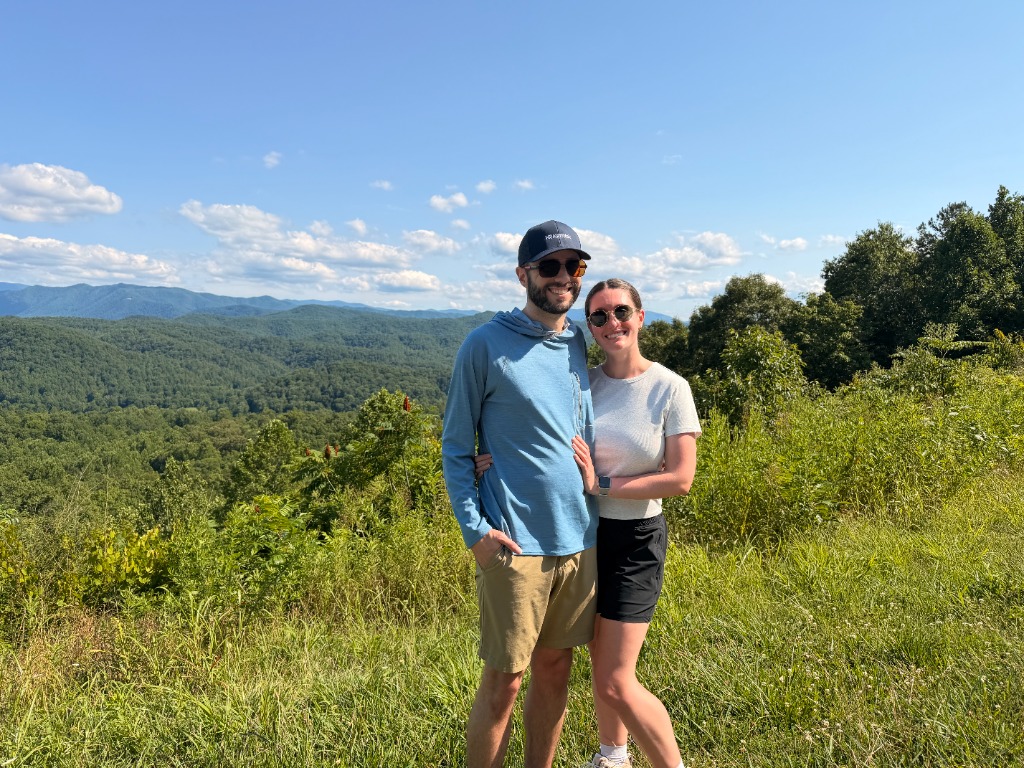
Dr. Robert Garrett
PhD in Statistics | Climate Risk Modeler
I’m a data scientist and statistician with expertise in spatiotemporal statistics, machine learning, climate risk modeling, and AI security. I've recently joined KatRisk as a Senior Catastrophe Risk Modeler, where I work at the intersection of climate science, extreme event analysis, and insurtech.
Prior to KatRisk, I was a Data Scientist at Carnegie Mellon University’s Software Engineering Institute (SEI). There, I partnered with government organizations to build and deploy trustworthy, large-scale AI systems. My work ranged from LLM-based pipelines for text insights extraction from huge corpora to real-time pipelines for risk-based authentication and anomaly detection. I also authored guidance on secure and resilient AI deployments, focusing on LLM agents and computer vision.
Previously, as a Statistical Sciences Graduate Intern at Sandia National Laboratories, I developed spatiotemporal models to study climate extremes, including a dynamic model of volcanic aerosol impacts (Mt. Pinatubo) and hybrid ML/statistical frameworks predicting wildfire risk from remote sensing data. My research has been published in leading venues such as NeurIPS (2024 Spotlight) and Environmetrics.
I hold a Ph.D. in Statistics from the University of Illinois Urbana-Champaign (UIUC), where my research advanced methods for evaluating climate models. I am passionate about translating rigorous statistical and AI/ML methods into scalable, real-world solutions that strengthen both scientific understanding and operational decision-making.
Core Areas of Expertise
Professional Experience
Senior Catastrophe Risk Modeler
- Applying climate statistics and machine learning to new exposure, underwriting, and portfolio risk challenges.
- Developing catastrophe models to translate complex atmospheric and environmental dynamics into actionable insurance insights.
- Supporting the next phase of growth in geospatial hazard and catastrophe analytics.
Data Scientist
- Built and deployed large-scale trustworthy AI systems and LLM-based pipelines for text insights extraction.
- Developed real-time pipelines for risk-based authentication and anomaly detection in enterprise datasets.
- Authored technical guidance and security guidelines on secure and resilient AI deployments, model risk management, robustness, and reproducibility.
- Collaborated with government engineers to quantify physical risks in logistics and predictive maintenance contexts.
Statistical Sciences Graduate Intern
- Developed novel spatiotemporal ML and statistical models in Python and C++ to quantify physical risks from extreme climate events.
- Modeled stratospheric volcanic aerosols impacts (Mt. Pinatubo) and predicted wildfire risk from remote sensing datasets.
- Integrated global-scale observational and remote sensing data to produce actionable risk assessments for interdisciplinary national security teams.
Biostatistics Co-op
- Analyzed health outcomes of pediatric obesity patients at 30+ hospitals to identify effective intervention strategies.
- Created an interactive R Shiny dashboard to summarize, analyze, and visualize patient progress.
Data Science Intern
- Built ML pipelines integrating Watson Machine Learning and R into blockchain networks to provide real-time analytics.
- Created simulated datasets in R for model testing, calibration, and evaluation.
Publications & Research
A Multivariate Space-Time Dynamic Model for Characterizing the Atmospheric Impacts Following the Mt. Pinatubo Eruption
Environmetrics 36 (6), e70030, 2025
Validating climate models with spherical convolutional Wasserstein distance
Advances in Neural Information Processing Systems (NeurIPS Spotlight) 37, 59119-59149, 2024
Behavior-based Confidence Scoring to Support Access Management in Zero Trust Systems
INCOSE International Symposium 35 (1), 1619-1638, 2025
ggvoronoi: Voronoi diagrams and heatmaps with ggplot2
Journal of Open Source Software 3 (32), 1096, 2018
An analysis of the impact of rent control on New York City housing
Computational Statistics 38 (4), 1643-1656, 2023
Immigrant residency and happiness in New York City: A. Tuiyott et al.
Computational Statistics 38 (4), 1657-1668, 2023
A spatial extension of weather forecasts
Computational Statistics 38 (3), 1157-1171, 2023
An analysis of crash-safety ratings and the true assessment of injuries by vehicle
Computational Statistics 36 (3), 1639, 2021
Projects & Interactive Software
ggvoronoi
An R package for creating quick and customizable Voronoi Chlorepleth Diagrams and heatmaps using ggplot2. Widely used in spatial analysis and visualization.
Nodesplosion
An interactive graph-theory game based on the premise that nodes can hold dots up to their degree and explode into neighbors upon exceeding capacity. Built as a collaborative project.
DataFest Presentations
A compilation of award-winning presentations from Miami University's annual DataFest competitions, analyzing TicketMaster suggesting systems, Expedia search queries, and Indeed job listing datasets.